Holiday Closures Ahead
As 2025 winds down, we would like to advise our customers about upcoming holiday closures.
Read more …
November 21, 2025
Shop Talk: Overhaul Exchange Pool Programs
Get the 411 on Onboard's cargo hook exchange pool programs to ensure that you're never without your cargo hook.
Read more …
March 07, 2025
Access a World of Services Online
No matter where you are, or what time zone you operate in, you can always get information about Onboard's products and services at our website. Here is an overview of some of the things you can do at our website.
Read more …
March 07, 2025
Come See Us at APSCON 2024 in Houston, Texas
If you are attending this year's APSCON conference, we hope you will stop by booth 514 to say hello and get answers to any questions you may have about Onboard's products and services.
Read more …
July 31, 2024
Visit Us at RotorTech 2024 in Gold Coast, Australia
If you are attending this year's RotorTech exhibition, we hope you will stop by booth 27B to say hello and get answers to any questions you may have about Onboard's products and services.
Read more …
May 09, 2024
Our Annual Customer Satisfaction Survey
Take a moment to answer our online survey, and you'll be automatically entered to win one of our survey prizes.
Read more …
January 22, 2024
Visit us at the HAI Heli-Expo 2024 in Anaheim
Onboard Systems will be exhibiting at this year's Heli-Expo conference in Anaheim, California on February 27th-29th as part of Signia Aerospace. If you are attending, we hope you'll stop by booth #1631 to say hello to us and all of the Signia Aerospace companies.
Read more …
January 16, 2024
Visit Us at the HAI Aerial Firefighting Safety Conference
Onboard Systems will be in booth 21 at the HAI AWSC conference in Boise. We hope you will stop by to say hello and get answers to any questions you may have about Onboard's products and services.
Read more …
November 03, 2023
Come see us at European Rotors in Madrid, Spain
Come see Onboard Systems at the 2023 European Rotors VTOL Show and Safety Conference on November 28-30 in Madrid, Spain.
Read more …
November 02, 2023
Come see us at the 2023 AAAA Cribbins Readiness Conference
Onboard Systems is exhibiting at the AAAA Cribbins Readiness Conference on November 13-15, 2023 at the Von Braun Center in Huntsville, Alabama. We hope to see you there!
Read more …
November 01, 2023
Stop by the Onboard Booth at the 2023 HAC Conference
We'll be in Booth 212 at this year's conference in Vancouver, British Columbia. We're looking forward to meeting with you there!
Read more …
October 31, 2023
Come See Us at APSCON 2023 in Orlando, Florida
If you are attending this year's APSCON conference, we hope you will stop by booth 721 to say hello and get answers to any questions you may have about Onboard's products and services.
Read more …
July 12, 2023
Quick Shipment for Remote Hooks & Long Lines
Now you can buy your remote hooks and long lines at the same time! We're stocking standard longline sizes so these products can be drop-shipped to your hangar or work site along with your remote hook order.
Read more …
June 29, 2023
External Load Mission Wallpapers for your Desktop
Install our exclusive Google Chrome themes featuring external load missions here.
Read more …
December 12, 2022
External Load Mission Chrome Themes for Your Browser
Install our exclusive Google Chrome themes featuring external load missions here.
Read more …
December 12, 2022
Photo Gallery: Onboard Systems at European Rotors 2022
View our 2022 European Rotors show gallery to see highlights from the show.
Read more …
November 08, 2022
Documentation Updates
Get the 411 about all the documentation updates and service bulletins that have taken place since the last issue of The Hook.
Read more …
October 27, 2022
Get the 411 on C-40 Cockpit Indicator Certifications
For your convenience, here is a complete reference list of aircraft and Onboard Weighing Systems currently certified for the C-40 indicator.
Read more …
October 27, 2022
Shop Talk: Troubleshooting Onboard Weighing Systems
Having a problem with your Onboard Weighing System? Download our Electronic Load Weigh System Troubleshooting Guide for recommended troubleshooting procedures that can be implemented in the field to diagnose and resolve your issue.
Read more …
October 27, 2022
Put Your Helicopter on the Cover of our 2023 Catalog
Submit your helicopter external load work photos now through November 30th for a chance to be on the cover of the Onboard Systems 2023 Product Catalog and win an Apple iPad Pro!
Read more …
October 26, 2022
How to Reset Your Password
If you are having trouble logging into your Onboard Systems account, here's how you can reset your password to quickly regain access.
Read more …
October 26, 2022
Visit Us at the HAI Aerial Work Safety Conference
If you are attending the conference, we hope you will stop by to say hello and get answers to any questions you may have about Onboard's products and services.
Read more …
October 20, 2022
Stop by the Onboard Booth at the 2022 HAC Conference
We'll be in Booth 49 at this year's conference in Calgary. We're looking forward to meeting with you there!
Read more …
October 19, 2022
Visit Us at European Rotors
If you are planning to attend the 2022 European Rotors conference in Cologne, Germany, we hope you will stop by our stand and say hello!
Read more …
October 06, 2022
Update Your Email Preferences
If you feel you are getting too much email from us (or not enough), you can view and manage the campaigns you are currently subscribed to at any time.
Read more …
August 11, 2022
Dressed Longline Packages
Onboard Systems stocks fully dressed longlines that are available for immediate shipment with your remote hook order, and can even be drop-shipped to the field.
Read more …
June 30, 2022
Using the C-39 Cockpit Indicator to Track Water Drops
Operators with an Onboard Weighing System using the C-39 cockpit indicator can send the Analog-Out signal to an Additional Telemetry Unit (ATU) to provide customers with water drop data. Here's how.
Read more …
June 30, 2022
Come See Us at APSCON 2022 in Reno, Nevada
If you are attending this year's APSCON conference, we hope you will stop by booth 827 to say hello and get answers to any questions you may have about Onboard's products and services.
Read more …
June 28, 2022
Overhaul Options for Your TALON Cargo Hooks
Even though Onboard's TALON cargo hooks give some of the longest TBOs in the industry, at some point, you
will need to overhaul that hook. Here's an overview of your options.
Read more …
June 27, 2022
Send Us Your Videos... And Get Some Great Stuff!
Want to get some cool Onboard Systems swag? If you've got some helicopter photos or videos of helicopters at work to share, we'd love to hear from you.
Read more …
June 25, 2022
Wanted: Reviews & Testimonials
Tell us how our equipment has helped you perform external load missions and we'll feature your company in an upcoming issue.
Read more …
June 25, 2022
Shop Talk: How to Update Your C-40 Firmware
One of the many benefits our latest generation C-40 Cockpit Indicator offers is the ability to upgrade the firmware using a thumb drive. The software patch is available as a direct download from our website at no additional cost. Here's what you need to do.
Read more …
May 05, 2022
Spring 2022 Survey
Take a moment to answer this three question survey and you'll be automatically entered to win one of our survey prizes, including including a Cutter & Buck Bainbridge duffel bag for the grand prize winner.
Read more …
April 14, 2022
Photo Gallery: Onboard Systems at Heli-Expo 2022
View our 2020 Heli-Expo Show gallery to see highlights from the show.
Read more …
April 06, 2022
Visit Us at RotorTech 2022 in Brisbane, Australia
If you are attending this year's RotorTech exhibition, we hope you will stop by booth 1D3 to say hello and get answers to any questions you may have about Onboard's products and services.
Read more …
April 06, 2022
Shop Talk: Picking the Correct Swing Kit for your H125 CRFS Aircraft
Onboard has a number of CRFS-compatible cargo hook swing system kits, retrofit kits, and upgrade kit options available. Here's how to find out what you need for your aircraft.
Read more …
March 31, 2022
Photo Gallery: 2022 Catalog Cover Photo Contest Winners
View the winner photo gallery from our 2022 Catalog Cover Photo Contest.
Read more …
March 09, 2022
Visit us at the HAI Heli-Expo 2022 in Dallas
If you are attending this year's Heli-Expo conference, we hope you will stop by booth 8010 to say hello and get answers to any questions you may have about Onboard's products and services.
Read more …
January 13, 2022
Our Annual Customer Satisfaction Survey
Onboard Systems is committed to customer satisfaction by continually improving product quality and customer service. Our annual survey supports our ISO 9001:2015 AS9100D program and has just 11 quick multiple-choice questions to answer. Please take a moment to complete our online survey, and you'll be automatically entered to win one of our survey prizes.
Read more …
January 11, 2022
Update on Sales Tax Charges for United States Deliveries
As previously announced, Onboard Systems is now collecting sales tax charges for deliveries to United States addresses in certain states.
Read more …
July 01, 2021
Summer 2021 Survey: Website Usability
Take a moment to answer our online survey, and you'll be automatically entered to win one of our survey prizes, including including a Cutter & Buck Bainbridge duffel bag for the grand prize winner.
Read more …
June 10, 2021
Spring 2021 Survey: Heavy Lift Remote Hooks
Take a moment to answer our online survey, and you'll be automatically entered to win one of our survey prizes, including including a Cutter & Buck Bainbridge duffel bag for the grand prize winner.
Read more …
April 08, 2021
Shop Talk: Fix It Yourself, or Return for Service?
Customers love their Onboard Systems equipment because it is easy to service. However, there are circumstances where it's better to contact us before working on your equipment.
Read more …
April 08, 2021
Repair Station Turn-Times Continue Improvement
It's been two years since we first reported on our efforts to improve our repair station turn times, and we're pleased to share even greater success.
Read more …
April 07, 2021
Photo Gallery: 2021 Catalog Cover Photo Contest Winners
View the winner photo gallery from our 2021 Catalog Cover Photo Contest.
Read more …
March 16, 2021
Shop Talk: Storage and Inactivity
Got storage questions? Here are a few guidelines to assist you with preparing your cargo hook for storage or reinstallation.
Read more …
December 16, 2020
How to Convert Online Quotes to an Order
By popular request, we've updated our website to allow you to save your quotes, shopping carts, and previous web orders in your online account. Best of all, you'll be log in and view your previous quotes and move them into your shopping cart, as well as reorder parts using previous order information.
Read more …
December 02, 2020
Shop Talk: Mechanical Release Cables
Cargo hook manual release cables require extreme care during installation, use, and maintenance.
Read more …
September 09, 2020
Sales Tax Charges Begin Rolling Out for United States Deliveries
Starting October 1, 2020, Onboard Systems will begin rolling out sales tax charges for deliveries to United States addresses in certain states.
Read more …
September 09, 2020
Autumn 2020 Survey: Travel Plans
We are currently planning our 2021 tradeshow and conference schedule, and we wanted to gauge the sentiment of our customers regarding business travel.
Read more …
September 08, 2020
Photo Gallery: Fit Check for Sikorsky UH-60A Black Hawk Replacement Cargo Hook Kit
Take a look at these photos of our forthcoming replacement cargo hook kit for the Sikorsky UH-60A Black Hawk aircraft from our recent fit check and flight testing procedures.
Read more …
June 23, 2020
Shop Talk: Load Cell Maintenance
Onboard Weighing Systems provide operators with vital information about the weight they are carrying. Proper maintenance, including regular inspection and calibration, is critical to ensure ongoing accuracy.
Read more …
June 10, 2020
Sales Tax Collection Changes for United States Customers
Due to recent changes in tax law, Onboard Systems will soon begin to collect sales tax on all orders delivered in the United States, unless we have a Reseller Permit or Tax Exemption certificate on file.
Read more …
April 29, 2020
Shop Talk: Coatings & Finishes
You can extend the life of your Onboard Systems equipment with proper touch-ups for coatings and finishes that are damaged during use in the field.
Read more …
March 06, 2020
Extended Shelf & Service Life for Barry Longlines & Cargo Nets
Barry Cordage recently extended the combined shelf and service life for their longlines and cargo nets.
Read more …
March 05, 2020
Photo Gallery: Onboard Systems at Heli-Expo 2020
View our 2020 Heli-Expo Show gallery to see highlights from the show.
Read more …
March 05, 2020
Spring 2020 Issue Survey
Take a moment to answer our online survey, and you'll be automatically entered to win one of our survey prizes, including your choice of an Apple TV 4 or Roku Ultra player for the grand prize winner.
Read more …
March 04, 2020
Photo Gallery: 2020 Catalog Cover Photo Contest Winners
View the winner photo gallery from our 2020 Catalog Cover Photo Contest.
Read more …
January 22, 2020
Photo Gallery: Bell 206L & Bell 407 HEC Cargo Hook Kits
Take a look at these photos of our forthcoming HEC kits for the Bell 206L & Bell 407 aircraft from our recent fit check and flight testing procedures.
Read more …
November 14, 2019
Shop Talk: Troubleshooting Tips for Load Cells and Cockpit Indicators
If you don't have a spare load cell or cockpit indicator lying around to use for troubleshooting problems with your Onboard Weighing System, here's a workaround.
Read more …
August 28, 2019
Shop Talk: Nut Adjustments to Load Cell Covers
Don't torque that nut! This article explains why you should never adjust the nuts on your load cells.
Read more …
May 23, 2019
Three Tips to Stay on Top of Documentation Revisions
Onboard Systems wants to make it easy for you to stay on top of any documentation revisions for your cargo hook equipment, so here are several tips that may prove useful.
Read more …
May 22, 2019
Sign Up for Convenient Email Invoices
This option enables customers to receive an invoice before their order arrives to help with customs paperwork and internal receiving processes for new product.
Read more …
May 20, 2019
Summer 2019 Issue Survey
Take a moment to answer our online survey, and you'll be automatically entered to win one of our survey prizes, including your choice of an Apple TV 4 or Roku Ultra player for the grand prize winner.
Read more …
May 15, 2019
Photo Gallery: Onboard Systems at Heli-Expo 2019
View our 2019 Heli-Expo Show gallery to see highlights from the show — and enter to win free t-shirts!
Read more …
March 20, 2019
Shop Talk: Lubricants
An important part of maintaining your cargo hook equipment is applying the right lubricants to key locations at appropriate intervals.
Read more …
March 20, 2019
Staying on Top of Service Alerts & Bulletins Lets You Lift Safely
Onboard Systems has established processes to ensure that we dispatch service alerts and service bulletins to customers who have purchased equipment directly from us. But if you purchased Onboard equipment through a distributor, here's what you need to do to make sure we can reach you.
Read more …
March 20, 2019
Photo Gallery: 2019 Catalog Cover Photo Contest Winners
View the photo gallery from our 2019 Catalog Cover Photo Contest.
Read more …
February 12, 2019
Technical Contact eMail List for Service Alerts & Bulletins
Onboard Systems has set up a special email list to help keep you informed about service alerts and bulletins for our cargo hook equipment.
Read more …
December 10, 2018
Maintenance Made Easy
To help our customers evaluate their choices and expedite overhauls, repairs, and other services, the Onboard Systems website has a maintenance section where you can access information about our maintenance services.
Read more …
December 10, 2018
Shop Talk: Inspection Schedules
Get the 411 on required inspections and maintenance intervals for your cargo hook.
Read more …
November 29, 2018
Shop Talk: Inspection Requirements for Other Equipment
While many operators are familiar with the on-going inspection and service requirements for their cargo hooks, they may not be as familiar with inspection requirements for other related equipment, such as suspension systems, hydraulic release handles, and electric swivels.
Read more …
September 14, 2018
Onboard Systems Successfully Transitions to AS9100 Revision D
Onboard Systems has recently been certified for AS9100 Revision D, the latest revision to the internationally adopted and standardized Quality Management System (QMS) for the aerospace industry.
Read more …
September 11, 2018
Just the FAQ, Please
If you are having trouble finding the information you need about a part or service, you may want to check out the FAQ page to see if your question has already been answered.
Read more …
September 10, 2018
Summer 2018 Issue Survey
Take a moment to answer our online survey, and you'll be automatically entered to win one of our survey prizes, including your choice of an Apple TV 4 or Roku Ultra player for the grand prize winner.
Read more …
June 12, 2018
Repair Station Improvements
We've been taking steps to improve our repair station services to help our customers get their equipment back in the field as quickly as possible.
Read more …
June 08, 2018
Request Quotes Online, 24x7
If your company requires a printed quote to make purchases, you're going to love our new online quote system, which is available 24 hours a day, seven days a week.
Read more …
May 29, 2018
How to Search for Service Alerts & Bulletins
We've set up a page on our website to help you search for service alerts and service bulletins using either the part number or the STC number. This search page makes it easy to see if your equipment needs additional attention — and find out what you need to do next.
Read more …
May 22, 2018
Privacy Policy Updates
Onboard Systems has updated our privacy policy to address Europe's General Data Protection Regulation (GDPR). Here's how these changes will affect you.
Read more …
May 22, 2018
Shop Talk: Changes to Load Cell Maintenance
We recently revised the maintenance criteria for our Onboard Weighing System kits and load cells.
Read more …
March 29, 2018
Get the 411 on Surefire Products
For your convenience, here is a complete reference list of aircraft and cargo hook kits currently featuring Surefire hooks.
Read more …
March 27, 2018
Photo Gallery: 2018 Catalog Cover Photo Contest Winners
View the photo gallery from our 2018 Catalog Cover Photo Contest.
Read more …
March 27, 2018
Photo Gallery: Onboard Systems at Heli-Expo 2018
View our 2018 Heli-Expo Show gallery to see highlights from the show.
Read more …
March 27, 2018
Spring 2018 Issue Survey
Take a moment to answer our online survey, and you'll be automatically entered to win one of our survey prizes, including your choice of an Apple TV 4 or Roku Ultra player for the grand prize winner.
Read more …
March 26, 2018
Increased Rated Load for TALON 3K Remote Hooks
Onboard Systems has increased the rated load of the TALON 3K Remote Cargo Hook series from 3,000 lb. to 3,300 lb. / 1500 kg through a re-qualification effort.
Read more …
January 31, 2018
Service Life Update for Synthetic Helicopter Longlines from Barry Cordage
Barry Cordage recently modified the service life calculation for their synthetic helicopter longlines to include shelf life, in addition to service life.
Read more …
December 14, 2017
How to Upgrade Your Equipment for Greater Safety & Value
As Onboard innovates solutions that improve safety and productivity, we also strive to make it simple and cost-effective for our existing customers to upgrade their existing equipment.
Read more …
December 11, 2017
Fall 2017 Issue Survey
Take a moment to answer our online survey, and you'll be automatically entered to win one of our survey prizes, including your choice of an Apple TV 4 or Roku Ultra player for the grand prize winner.
Read more …
September 30, 2017
Shop Talk: Change in Hydraulic Fluid
Onboard Systems is switching over to MIL-PRF-87257 hydraulic fluid for its cargo hook kits.
Read more …
September 30, 2017
Summer 2017 Issue Survey
Take a moment to answer our online survey, and you'll be automatically entered to win one of our survey prizes, including your choice of an Apple TV 4 or Roku Ultra player for the grand prize winner.
Read more …
June 22, 2017
Photo Gallery: 2017 Catalog Cover Photo Contest Winners
View the photo gallery from our 2017 Catalog Cover Photo Contest
Read more …
March 31, 2017
Product Spotlight: Dielectric (DEW) Longlines
Great care must be taken when operating a longline near powered electrical lines to prevent static discharge that could generate an electrical arc.
Read more …
March 31, 2017
Photo Gallery: Onboard Systems at Heli-Expo 2017
View our 2017 Heli-Expo Show gallery to see highlights from the show.
Read more …
March 31, 2017
Spring 2017 Issue Survey
Take a moment to answer our online survey, and you'll be automatically entered to win one of our survey prizes, including your choice of an Apple TV 4 or Roku Ultra player for the grand prize winner.
Read more …
March 31, 2017
Photo Gallery: Volo Mission
This issue's photo gallery features images from Volo Mission' external load training course, and a joint project with Onboard Systems and the new TALON® Auto-Loc Cargo Hook System.
Read more …
September 15, 2016
Get the 411 on Cargo Hook Equipment for the Bell 407
The Bell 407 is a popular utility aircraft, first put into service in 1996. Over the years, this aircraft has gone through many upgrades and improvements – and that includes the external cargo hook equipment.
Read more …
September 15, 2016
Photo Gallery: Onboard Systems at Heli-Expo 2016
View our 2016 Heli-Expo Show gallery to see highlights from the show.
Read more …
March 15, 2016
Product Spotlight: Surefire Release Technology
Onboard's Surefire Release Technology is a useful safety option which provides about a half-second delay from when the electrical release button is pressed until the hook opens to help guard against inadvertent releases.
Read more …
March 15, 2016
Jet Ranger Replacement Cargo Hook Kit
Onboard Systems has upgraded our replacement cargo hook kit for the Jet Ranger with a streamlined configuration that offers operators a significant improvement in ground clearance.
Read more …
March 15, 2016
Photo Gallery: 2016 Catalog Cover Photo Contest Winners
View the photo gallery from our 2016 Catalog Cover Photo Contest
Read more …
March 15, 2016
Customer Photo Gallery | Heli-TV SA
This issue's customer photo gallery comes courtesy of Heli-TV SA in Lodrino, Switzerland.
Read more …
December 15, 2015
Customer Photo Gallery | Chartright
This issue's customer photo gallery comes courtesy of Chartright in Toronto, Canada and features their Leonardo AW119 Koala fitted with an Onboard Systems cargo hook kit.
Read more …
June 15, 2015
Streamline the Overhaul Process for your Onboard Hook
Here are some tips that you can use to make sure your cargo hook equipment sails through the overhaul process as quickly as possible when you send it in for factory service.
Read more …
June 15, 2015
Photo Gallery: Onboard Systems at Heli-Expo 2015
View our 2015 Heli-Expo Show gallery to see highlights from the show.
Read more …
March 15, 2015
Customer Photo Gallery | HeliStream
This issue's customer photo gallery comes courtesy of HeliStream in Costa Mesa, California.
Read more …
March 15, 2015
External Loadwork Survey Results
For those operators who do perform external loadwork, 32% of respondents said that external loadwork accounts for at least 50% of their business.
Read more …
September 15, 2014
How to Opt-In: Canadian Anti-Spam Information
If you are located in Canada and are wondering why you no longer receive email communications from Onboard Systems, you may need to opt-in to our email list due to Canadian anti-spam laws.
Read more …
September 15, 2014
Barry Cordage Dielectric Longlines & Weighted End Covers
As an authorized distributor for Barry Cordage, we wanted to introduce Barry's D.E.W (Dielectric Even Wet) Longlines and Weighted End Covers to you.
Read more …
September 15, 2014
Tutorial Videos Help You Make the Most of the Onboard Systems Website
We have created a few video tutorials to provide our worldwide customer base with immediate access to the information they need, 24x7.
Read more …
June 15, 2014
International Return for Service Shipping Tips
International "Return for Service" shipments can be tricky—so we've compiled our best shipping tips to help you prepare packages that will make it through customs with little to no delay.
Read more …
June 15, 2014
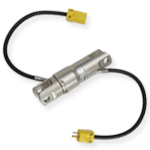
Let Your Load Spin for Safety with Electric Swivels
When you are transporting a spinning load, swivels are an essential tool for enhancing flight safety.
Read more …
June 15, 2014
Photo Gallery: Onboard Systems at Heli-Expo 2014
View our 2014 Heli-Expo Show gallery to see highlights from the show.
Read more …
March 15, 2014
Electric Swivels from Onboard Systems Help Improve Safety for Rotating Loads
Onboard's electric swivel line provides a continuous electrical connection between the cockpit release and the remote cargo hook, while allowing for hook rotation to accommodate external load movement without curling or tangling of the long line.
Read more …
December 15, 2013
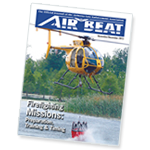
Onboard Systems Helps Public Safety Aviators Lift with Confidence
Onboard Systems was profiled in the Nov/Dec 2013 issue of Air Beat magazine, which is the journal of the Airborne Law Enforcement Association (ALEA). Air Beat is dedicated to airborne law enforcement.
Read more …
December 15, 2013
Another Tip to Expedite the Overhaul Process
When you need to send in your equipment for an overhaul—whether due to TBO (time between overhauls) or hours in use—time is of the essence. Here's another tip to help expedite the overhaul process.
Read more …
September 16, 2013
Three Tips to Expedite the Overhaul Process
Here are three tips to make sure your cargo hook equipment sails through the overhaul process as quickly as possible.
Read more …
July 15, 2013
Sign Up for our Document Update Service
We now offer a free, automated Document Update Service to help you keep up with documentation revisions for all of your Onboard Systems products.
Read more …
April 15, 2013
Photo Gallery: Onboard Systems at Heli-Expo 2013
View our 2013 Heli-Expo Show gallery to see highlights from the show.
Read more …
March 15, 2013
Improved Maintenance Information
Onboard Systems cargo hooks have some of the longest TBOs in the industry. For optimal safety and performance, regular maintenance and adherence to the overhaul schedule are essential. Let's review your options.
Read more …
December 15, 2012
More FedEx & UPS Shipping Options
Both FedEx and UPS are now offering additional shipping options, which may be of interest to you when you place your next order.
Read more …
June 15, 2012
Photo Gallery: Onboard Systems at Heli-Expo 2012
View our 2012 Heli-Expo Show gallery to see highlights from the show.
Read more …
March 15, 2012
Switch to Paperless Documentation
Onboard Systems is now providing a simple list of the user manual document numbers pertaining to the products in an order instead of paper copies of each document. The documentation list is folded into a special envelope to make it easy to spot inside of our product packaging.
Read more …
June 15, 2011
Full-Cage Remote Hooks: More Options for External Load Operations
Onboard has added full-cage versions of our popular 3,000 LB and 6,000 LB TALON Remote Hooks. The cage extends below the load beam and offers greater protection for missions in rugged terrain, while still providing a large access area in the front for loading.
Read more …
April 15, 2011
Photo Gallery: Onboard Systems at Heli-Expo 2011
View our 2011 Heli-Expo Show gallery to see highlights from the show.
Read more …
March 15, 2011
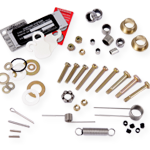
Overhaul Kits Make Overhauls Easy
Our overhaul kits let you place an order for a single part number and receive all the components needed to perform a standard cargo hook overhaul.
Read more …
November 15, 2010
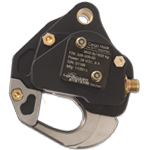
Next Gen TALON LC Keeperless Cargo Hook Rolls Out
As the TALON LC Keeperless Cargo Hook approaches its tenth anniversary, Onboard Systems has been hard at work to incorporate even more safety-oriented and user-friendly innovations into their flagship product.
Read more …
September 15, 2010
Full-Cage Option for 3K Remote Cargo Hook
By popular request, Onboard is pleased to offer a full-cage option for our 3,000 LB Remote Cargo Hook.
Read more …
August 15, 2010
Greater Load Security with Hydraulic Cargo Hook Technology
Onboard first began selling its safety-forward TALON LC Hydraulic Cargo Hooks in 2006, so we decided to touch base with an early adopter of this technological advance, Mustang Helicopters, to see how they're using these hooks in their perform external load missions.
Read more …
June 15, 2010
Format Changes for Onboard Systems Service Manuals
We are converting our product Service Manuals over to a new format — the Component Maintenance Manual, or CMM. Onboard's CMMs contain instructions for inspection, maintenance and overhaul of our cargo hook equipment and associated components, including recommended inspection intervals and techniques.
Read more …
March 15, 2010
Important Troubleshooting Tip for the TALON Keeperless Cargo Hook
Because an incorrect rigging adjustment of the mechanical release cable can lead to an inadvertent load release, we recommend that the manual release cable rigging be set at the hook each time the hook is installed on the aircraft. Here's what to do.
Read more …
August 15, 2009
Photo Gallery: Onboard Systems at Heli-Expo 2009
View our 2009 Heli-Expo Show gallery to see highlights from the show.
Read more …
March 15, 2009
The Little Chopper that Could: The R44 Makes Fast Work Lifting Christmas Trees in Oregon
Follow us along as we take a field trip to an Oregon tree farm to see how helicopters are used to lift bundles of Christmas trees and send them on their way to buyers around the world.
Read more …
December 15, 2008
Better Lifting Through Design: The Evolution of the Bell 407 Cargo Hook Suspension System
Operators around the world spoke up about the need for improvements to the trolley beam cargo hook suspension system on the Bell 407, and Onboard Systems responded.
Read more …
October 15, 2008
Cargo Hook Troubleshooting Guide
Onboard Systems has created a troubleshooting guide for our cargo hooks, which provides a general overview of common problems that may occur during external load work operations, as well as suggestions on how to resolve them.
Read more …
June 15, 2008
Keep your Documentation Current with Our Document Update Service
Onboard Systems new Document Update Service allows customers to self-register their Onboard Systems products on our website. If any documentation for their specific product(s) is updated (or if a service bulletin is issued), they will automatically be notified by fax or email.
Read more …
December 15, 2007
Save Time with Free RSS Services
For busy operators who use the Internet to track down contract opportunities, keep up with industry information, or track changes to rules and regulations, RSS feeds can be a big help.
Read more …
July 15, 2007